
If you haul equipment, livestock, or cargo in Tennessee, understanding the state’s towing laws isn’t optional. It’s the kind of thing that seems easy to put off until you’re sitting on the side of I-40 with an overweight citation and a fine that makes your next trailer purchase feel a lot less painful by comparison. Tennessee’s towing regulations exist for good reason, and the enforcement is real.
The tricky part is that “how much can I tow” isn’t a single-number answer. It depends on your tow vehicle, your trailer, your axle configuration, your combined weight, and in some cases, where exactly you’re driving. This guide breaks it all down so you can get on the road with confidence and stay out of trouble with the scales.
Start With the Basics: What the Weight Ratings Actually Mean
Before getting into Tennessee-specific numbers, it helps to understand the terminology, because confusing these terms is one of the most common mistakes people make when figuring out how much they can legally and safely haul.
- Gross Vehicle Weight Rating (GVWR) is the maximum loaded weight of a single vehicle as specified by the manufacturer. For a trailer, this includes the trailer itself plus everything on it.
- Gross Combined Weight Rating (GCWR) is the maximum total weight of your tow vehicle and your loaded trailer together. This number comes from your vehicle’s manufacturer and is the ceiling you cannot exceed regardless of what individual components are rated for.
- Gross Axle Weight Rating (GAWR) is the maximum weight each axle is designed to carry. You can have a setup that comes in under the GCWR but still be in violation if the weight is distributed in a way that overloads a single axle.
- Tongue weight is the downward force the trailer puts on your hitch. Too little tongue weight makes the trailer unstable and prone to swaying. Too much puts excessive stress on your tow vehicle’s rear axle and reduces steering control. As a general rule, tongue weight should be somewhere between 10 and 15 percent of the total loaded trailer weight.
Tennessee law and federal bridge law both reference these ratings, so knowing what they mean before you load up saves a lot of confusion later.
Tennessee’s Legal Weight Limits for Towing
Tennessee follows federal guidelines for most highway towing, with some state-specific provisions layered on top. Here are the numbers that matter most for the average person towing a trailer.
For single axles, the legal weight limit in Tennessee is 20,000 pounds. For tandem axles, it’s 34,000 pounds. The gross vehicle weight limit on interstate highways is 80,000 pounds, which is the federal standard. On state roads and non-interstate highways, the same 80,000-pound limit generally applies, though bridge postings and local restrictions can lower that threshold on specific routes.
For most private drivers towing trailers for agricultural, recreational, or equipment hauling purposes, the 80,000-pound combined limit is well above what you’ll ever approach. What matters more in day-to-day practice is staying within your specific vehicle and trailer ratings and making sure your axle weights are distributed properly.
One thing worth knowing: Tennessee does have seasonal weight restrictions that apply during certain periods, typically in late winter and early spring when road surfaces are more vulnerable to damage from heavy loads. These restrictions can temporarily lower the allowable weights on specific roads, so if you’re hauling heavy during that window, it’s worth checking current postings before you head out.
Commercial vs. Non-Commercial Towing
The rules aren’t the same for everyone on the road, and the distinction between commercial and non-commercial towing affects what’s required of you in Tennessee.
If you’re towing commercially, meaning you’re hauling for hire or as part of a business, federal and state commercial motor vehicle regulations apply. That includes weight limits, driver qualifications, and in many cases, log requirements and vehicle inspections.
For non-commercial towing, the rules are simpler, but they still exist. Private individuals towing trailers for farm use, recreational purposes, or personal equipment hauling operate under a different set of requirements than commercial operators, but they’re still subject to weight limits and registration requirements based on the trailer’s GVWR.
Tennessee also has specific rules around trailer registration that tie directly to weight. Trailers with a GVWR over 3,000 pounds must be registered in Tennessee. The registration category your trailer falls into is determined by its GVWR, and operating with an improperly registered trailer can create legal problems independent of any weight violation.
CDL Requirements and When They Kick In
This is where a lot of people get caught off guard. You don’t need a commercial driver’s license just because you’re towing something heavy, but there are thresholds where a CDL does become required, and they’re lower than many drivers expect.
In Tennessee, a Class A CDL is required when your combined gross vehicle weight rating exceeds 26,001 pounds, provided the towed vehicle has a GVWR greater than 10,000 pounds. If you’re towing a large equipment trailer loaded with a full-size tractor or multiple pieces of heavy machinery, it’s worth doing the math on your combined ratings before you assume a regular driver’s license covers you.
There are exemptions that apply to certain agricultural operations and farm vehicles, but the specifics depend on how and where the vehicle is being operated, and those exemptions have their own conditions. When in doubt, check with the Tennessee Department of Safety and Homeland Security or consult someone familiar with the specific regulations that apply to your situation.
Your Truck Matters as Much as Your Trailer
One of the most important things to understand about legal towing in Tennessee is that the law sets a ceiling, but your equipment sets a different ceiling, and you have to respect both.
A half-ton pickup has a tow rating that typically falls somewhere between 8,000 and 13,000 pounds depending on the configuration. A three-quarter-ton or one-ton truck can handle considerably more, sometimes well above 20,000 pounds with the right setup. But even if Tennessee law technically allows a certain combined weight, towing more than your specific vehicle is rated for is dangerous, potentially illegal under vehicle operation statutes, and will void your warranty faster than almost anything else you can do.
Payload capacity is just as important as tow rating and gets overlooked constantly. Your truck’s payload rating covers everything in and on the truck, including passengers, cargo in the bed, and the tongue weight from your trailer. Load too much onto the rear axle and you can exceed your payload rating even if you’re within the tow rating. The two numbers work together, and you need to check both.
If you’re regularly hauling near the limits of what your truck is rated for, it’s also worth thinking about brake controller requirements. Tennessee requires a functioning brake system on trailers over a certain weight, and electric brake controllers on the tow vehicle are necessary when hauling trailers equipped with electric brakes. Operating without a properly functioning trailer brake system on a loaded trailer is both unsafe and a citable offense.
Choosing a Trailer That Keeps You Legal
The trailer itself plays a major role in whether your setup is legal. When you’re shopping for a trailer, the GVWR is one of the most important numbers to pay attention to because it determines your registration category, your legal load limit for that trailer, and in some configurations, whether CDL requirements apply to your combination.
A trailer with a higher GVWR gives you more legal hauling capacity, but it also needs to be matched to a tow vehicle that can handle it. There’s no benefit to purchasing a trailer rated for 16,000 pounds if your truck is only rated to tow 12,000 pounds. The limiting factor in your combination is always the lowest-rated component.
Axle configuration matters here too. A single-axle trailer distributes all of its loaded weight through one axle, which limits how much weight you can legally put on it under Tennessee’s 20,000-pound single-axle limit. A tandem-axle trailer spreads the load across two axles, allowing for higher total weights while keeping each individual axle within legal limits. For anyone hauling heavy equipment, livestock, or large loads on a regular basis, tandem-axle trailers are typically the more practical and legally flexible choice.
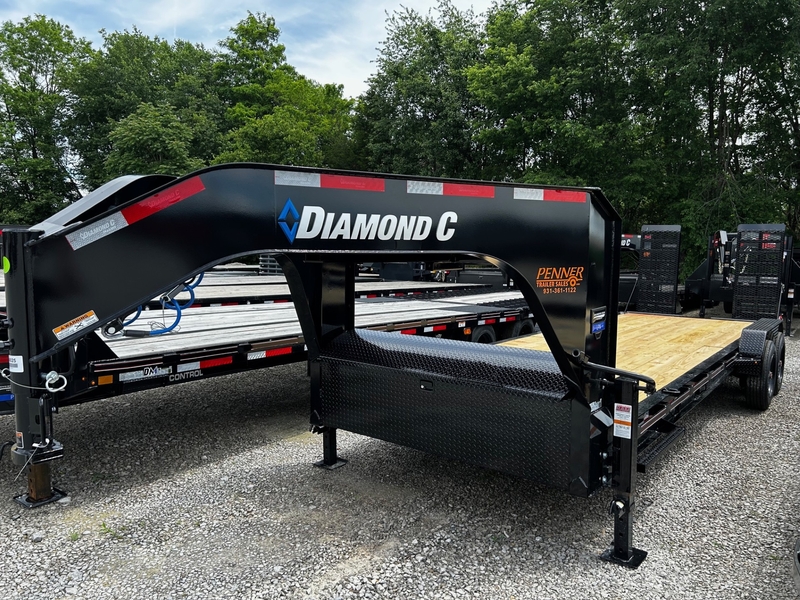
Gooseneck trailers, which attach in the bed of a pickup rather than to a ball hitch on the bumper, offer higher weight capacity and better weight distribution for heavy loads. If you’re regularly moving large tractors or multiple pieces of equipment, a gooseneck setup paired with a capable one-ton truck is often the right combination for staying within both legal and mechanical limits.
What Happens if You’re Over Weight
Tennessee operates fixed weigh stations on major interstates and routes, and also deploys mobile enforcement units. Commercial vehicles are generally required to stop at weigh stations, and officers can flag other vehicles in for inspection if they appear overloaded.
Overweight fines in Tennessee are calculated based on how far over the legal limit you are, and they scale up quickly. Being a few hundred pounds over might result in a modest fine. Being significantly over the limit can result in citations that run into the hundreds or even thousands of dollars, plus requirements to offload the excess weight before you can legally continue. Repeat violations can create longer-term problems with your operating authority if commercial regulations apply to your situation.
Beyond the legal consequences, an overloaded trailer creates real safety risks. Stopping distance increases dramatically with added weight, trailer sway becomes more difficult to control, and the structural components of both your truck and your trailer experience stress beyond what they were designed to handle.
Getting the Right Trailer for Tennessee Hauling
Knowing the rules is step one. Having equipment that’s actually built to handle your loads legally and safely is step two. The right trailer for your operation depends on what you’re hauling, how often you’re hauling it, and what your tow vehicle can realistically handle.
At Penner Trailer Sales, we work with customers to find trailers that match their actual hauling needs rather than just pointing them toward the biggest or most expensive option. Whether you’re moving farm equipment across Middle Tennessee, hauling ATVs out to the hills, or running a landscaping operation in the Memphis suburbs, getting the right GVWR and axle configuration from the start keeps you legal, keeps your equipment safe, and keeps the whole operation running the way it should.
Frequently Asked Questions About Towing Laws in Tennessee
Do I need a CDL to tow a large trailer in Tennessee?
It depends on your combined weight ratings. A Class A CDL is required in Tennessee when the combined GVWR of your tow vehicle and trailer exceeds 26,001 pounds and the trailer has a GVWR over 10,000 pounds. If you’re unsure whether your specific setup crosses that threshold, add up the GVWR of both your truck and your loaded trailer and compare it to those numbers. Agricultural exemptions exist but come with their own conditions.
Does Tennessee require brakes on trailers?
Yes. Tennessee law requires trailers over a certain weight to have their own braking system. If your trailer is equipped with electric brakes, your tow vehicle needs a compatible brake controller. Operating a heavily loaded trailer without a functioning brake system is both dangerous and a violation, so make sure your setup is equipped correctly before you haul.
What is the maximum towing weight on Tennessee interstates?
The general limit on Tennessee interstates follows the federal standard of 80,000 pounds gross combined weight. Single axles are limited to 20,000 pounds and tandem axles to 34,000 pounds. Bridge postings and local restrictions can create lower limits on specific routes, so it pays to know your route if you’re hauling at or near the upper limits.
Do I need to register my trailer in Tennessee?
Trailers with a GVWR over 3,000 pounds must be registered in Tennessee. The registration class is determined by the trailer’s GVWR. If you’re buying a new trailer, make sure you understand which registration category it falls into and get it properly registered before hauling.
What is tongue weight and why does it matter legally and safely?
Tongue weight is the downward force your trailer exerts on your hitch. It should generally fall between 10 and 15 percent of your total loaded trailer weight. Too little causes dangerous trailer sway. Too much overloads your rear axle and reduces your ability to steer. Improper weight distribution can also mean you’re exceeding your vehicle’s payload rating even if your total tow weight looks fine on paper.
Can I tow more if I upgrade my hitch?
Upgrading your hitch can allow you to tow heavier trailers in terms of the hitch’s mechanical capacity, but it does not change your vehicle’s GVWR, GCWR, or payload rating. Those numbers are set by the manufacturer and reflect the capability of your entire drivetrain, not just the hitch point. Always work within your vehicle’s published ratings regardless of what hitch hardware you’re using.