A tractor on its own is useful. A tractor with the right attachments is a whole fleet of machines rolled into one. That is really the appeal of a compact utility tractor like the Kioti CK Series: it is a versatile platform that can take on an enormous range of jobs depending on what you hook up to it. The trick is knowing which attachments earn their place and match the way you plan to use your tractor.
The CK Series is built to be a capable, do-it-all compact tractor, well suited to property maintenance, small-scale farming, landscaping, and general work around an acreage. Because it works with a wide variety of implements, the real question for most owners is not whether the tractor can handle the job, but which attachments will get the most use and deliver the most value.
Start With How You Will Actually Use Tractor Attachments
Before getting into specific attachments, it is worth thinking honestly about the work you actually need to do. It is easy to get excited about every implement available and end up with a shed full of attachments that rarely come off the shelf. Consider the property you are maintaining and the jobs that come up most often. Are you clearing brush, moving material, grading a driveway, digging, mowing large areas, or handling snow in the winter? The answers point you toward the attachments that will earn their keep, and a few well-chosen implements that match your regular work will serve you far better than a large collection that mostly gathers dust.
Moving and Material Handling Attachments
These attachments expand your tractor’s ability to lift, carry, and securely move everything from loose material to heavy, awkward loads.
Front End Loader
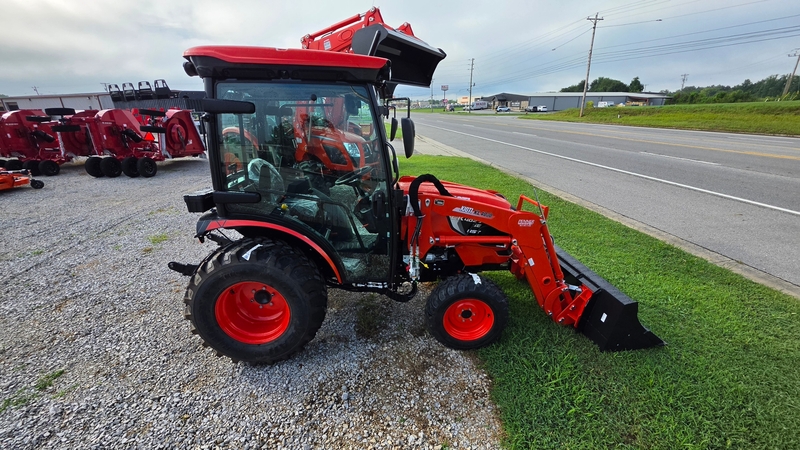
If there is one attachment that belongs on almost every compact tractor, it is the front-end loader. For many CK Series owners it is on the tractor most of the time, and for good reason: it transforms the tractor into a machine for moving, lifting, and carrying, which covers an enormous amount of the work that comes up on any property.
A loader handles moving dirt, gravel, mulch, and material of all kinds. It lifts and carries heavy objects, loads trucks and trailers, backfills, grades roughly, and tackles countless everyday tasks. Once you have used one regularly, it is hard to imagine working without it, which is why it is the first attachment to have and the one that stays on the tractor by default. Loaders also serve as the foundation for other attachments, since a quick-attach system lets you swap the bucket for forks, a grapple, and other implements, multiplying the loader’s usefulness considerably.
Pallet Forks
Pallet forks are a simple attachment that dramatically expands what your tractor can do around a property or worksite. They attach to the loader and turn your tractor into a machine for lifting and moving palletized loads, bulky materials, and awkward objects.
Forks make quick work of moving pallets of feed, seed, or supplies, handling building materials, relocating items that are difficult to carry, and loading and unloading deliveries. For anyone who regularly receives materials on pallets or needs to move heavy objects, forks are an inexpensive and highly practical addition, and because they use the loader’s quick-attach system, swapping between the bucket and forks takes only moments.
Grapple
A grapple is one of those attachments owners often do not realize they need until they have one, at which point it becomes indispensable. It attaches to the loader and adds a hydraulic clamping jaw, letting you grab, hold, and move materials a bucket alone cannot handle securely.
Grapples are ideal for handling brush, logs, and debris, clearing storm damage, moving rocks and irregular objects, and cleanup work of all kinds. The ability to clamp down on a load rather than just scoop it makes an enormous difference with material that does not sit neatly in a bucket. For property cleanup, land clearing, and managing brush, a grapple is a transformative attachment.
Digging and Groundwork Attachments
Whether you are trenching, installing posts, or preparing soil, these attachments take much of the manual labor out of groundwork projects.
Backhoe
For anyone who does serious digging, a backhoe turns a compact tractor into a functioning excavation machine. Digging trenches, footings, and holes by hand is brutal, time consuming work, and a backhoe makes those jobs dramatically faster and easier. It is invaluable for trenching water lines, drainage, or electrical, excavating for footings and foundations, removing stumps and roots, and general digging. For rural property owners, small contractors, and anyone doing regular excavation, it is one of the more transformative attachments available.
It is worth being realistic about how often you will use one, because a backhoe is a significant investment. If digging is a regular part of your work, it pays for itself in saved labor; if you only dig occasionally, renting may make more sense than buying. But for those who need it, it pays for itself.
Post Hole Digger (Auger)
Anyone who has dug fence post holes by hand knows how much work it is. A post hole digger, or auger, makes that job almost effortless by comparison, boring clean holes quickly and consistently.
An auger is the attachment to have for installing fences, setting posts for decks or structures, planting trees, and any project that requires digging numerous holes. Augers come in various diameters to match the job, and for fencing projects in particular the time and effort saved is enormous. If you install or maintain fencing or regularly set posts, this attachment quickly proves its worth.
Rotary Tiller
For anyone working the soil, whether for gardens, food plots, or seedbeds, a rotary tiller breaks up and conditions soil far more efficiently than any manual approach. It attaches to the rear of the tractor and uses the power take-off to churn and prepare the ground.
A tiller is the ideal attachment for establishing and maintaining gardens, preparing food plots, breaking new ground, and conditioning soil for planting. For owners who grow their own food or maintain plots for wildlife, it makes soil preparation quick and thorough, turning hard ground into a workable seedbed in a single pass.
Grading and Property Maintenance Attachments
From maintaining gravel driveways to controlling overgrown fields, these attachments help keep larger properties in shape throughout the year.
Box Blade
A box blade is one of the most useful attachments for anyone maintaining driveways, grading, or leveling ground. It is straightforward and proves its value quickly, especially on properties with gravel drives or areas that need regular grading.
The box blade is great at spreading and leveling material, grading and smoothing driveways, filling in ruts, and preparing ground for other work. The scarifiers on the back break up hard or compacted soil while the blade levels and smooths as you go. For gravel driveway maintenance in particular, a box blade is hard to beat, and it is an attachment many owners find themselves reaching for again and again.
Rotary Cutter
If you have fields, pastures, roadsides, or overgrown areas to keep in check, a rotary cutter, sometimes called a brush hog, is essential. It handles the kind of rough cutting a standard mower cannot, chewing through tall grass, weeds, brush, and light saplings with ease.
A rotary cutter is the go-to attachment for maintaining pastures and fields, clearing overgrown areas, keeping roadsides and fence lines trimmed, and brush management. For property owners with acreage to maintain, it is one of the most practical attachments you can own. It turns the daunting task of keeping large areas under control into a manageable, even quick, job.
Rear Blade
A rear blade is a versatile grading and leveling implement that complements a box blade and, for some tasks, does the job on its own. It is particularly useful for driveway maintenance, grading, and, in colder climates, snow.
Rear blades can be angled to move material to one side, which makes them well suited to grading driveways, cutting into banks, leveling ground, and clearing snow in the winter. That ability to angle the blade gives it flexibility a fixed implement does not have, and for many owners a rear blade earns its place as a year-round tool that shifts from grading in the warmer months to snow removal when winter arrives.
Snow Removal Attachments
For CK Series owners in areas that see real winter, snow removal attachments turn the tractor into a serious asset when the weather turns. A rear blade, as mentioned, doubles as a capable snow-moving tool when angled. A front-mounted snow blade or plow pushes snow efficiently and is well suited to clearing driveways and lots. For heavier snowfall, a snow blower throws snow clear of the area rather than just pushing it, which is valuable when there is nowhere convenient to pile it.
Choosing the Right Attachments for Your Needs
For most CK Series owners, a front-end loader is the foundational piece, and from there the right additions depend on your property and your priorities. Someone maintaining pastures will prioritize a rotary cutter, someone installing fencing will want an auger, and someone maintaining a gravel driveway will reach for a box blade.
It also helps to think about how attachments work together. A loader with a quick-attach system, paired with forks and a grapple, covers an enormous range of material-handling tasks with quick swaps between them. Matching attachments to your specific tractor matters too, since they need to suit your tractor’s size, horsepower, and hydraulic capacity to perform well and operate safely. Working with a knowledgeable dealer helps ensure the attachments you choose are a good fit for your CK Series and the work you intend to do.
Get the Most Out of Your CK Series
The versatility of the Kioti CK Series is what makes it such a valuable machine, and the right attachments are what unlock that versatility. Whether you are maintaining a property, working a small farm, tackling landscaping projects, or handling seasonal work, choosing attachments that match your needs turns your tractor into a tool that earns its keep year-round.
At Penner Trailer Sales, we help customers find the right equipment and attachments to match their tractors and their work. Rather than steering you toward attachments you do not need, we take the time to understand what you are trying to accomplish so you end up with a setup that accurately fits your property and your goals. If you are not sure which attachments make sense for the work you do, that is exactly the kind of thing our team can help you sort out.
Frequently Asked Questions About Kioti CK Series Attachments
What is the most important attachment to get first for a CK Series?
For the vast majority of owners, a front-end loader is the best first attachment. It handles moving, lifting, and carrying material, which covers a huge share of everyday tractor work, and it stays on the tractor most of the time for many owners. It also serves as the foundation for other attachments like forks and grapples through a quick-attach system.
Can a CK Series tractor handle a backhoe?
Yes. The CK Series is designed to work with a range of implements, including backhoe attachments suited to compact tractors. A backhoe turns the tractor into a real digging machine for trenches, footings, and excavation. That said, it is a significant investment, so it is worth considering how often you will use one versus renting for occasional jobs.
How do I know if an attachment is compatible with my tractor?
Attachments need to match your tractor’s size, horsepower, and hydraulic capacity to work properly and safely. An attachment that is too large or demanding for the tractor will not perform well and can create safety and mechanical issues. The best way to ensure a good match is to work with a knowledgeable dealer who can confirm that an attachment is appropriate for your specific CK Series model.
What is the difference between a box blade and a rear blade?
Both are used for grading and leveling, but they work differently. A box blade has an enclosed frame with scarifiers and works especially well for spreading material, leveling, and maintaining gravel driveways. A rear blade is a single angled blade that is well suited to grading, cutting into banks, and moving snow. Many owners find both useful for different tasks, though either can handle general grading.
Do I need a grapple if I already have a loader bucket?
A grapple does something a bucket cannot: it clamps down on a load, which lets you securely grab and move brush, logs, rocks, and irregular objects that will not sit neatly in a bucket. If you do land clearing, storm cleanup, or handle a lot of brush and debris, a grapple is a hugely valuable addition even if you already have a bucket. For simple scooping and material moving, a bucket is fine on its own.
Which attachments are worth it for winter use?
For snow removal, a rear blade can be angled to move snow, a front-mounted snow blade or plow pushes it efficiently, and a snow blower throws snow clear of the area for heavier snowfall. The right choice depends on how much snow you deal with and where you need to put it. For anyone who regularly clears snow, these attachments save a great deal of time and effort.